How to Ask a Client for Upfront Payment
By Miguel Silva Published
Key takeaways
- Bring it up while you're still talking about the price. Later gets harder.
- Say the number with no question mark on the end.
- A quarter to half is normal on project work. Check your local rules before you write one into a contract.
- Work out whether it's can't or won't. Only one of them is about you.
- The balance invoice is the half that goes quiet. Give it a real date.
Nobody enjoys typing the upfront payment sentence. You've got the job, everyone's pleased with themselves, and now you have to bring up money before you've done a single thing, and somehow it comes out sounding like you're accusing them of something.
Good news: most of this is a timing problem. Say the number in the same conversation where you agree the price and it goes through as an ordinary term of business, the same way the deadline does. Leave it until the week you start and the exact same sentence turns into a new condition, which is much harder to say and much easier to argue with.
So most of what follows is about when to ask for upfront payment and what to actually type, because the typing is where everyone stalls.
The nerves deserve a mention too. There's a version of this conversation running in your head where the client goes quiet, decides you don't trust them, and hires someone more relaxed about it. That's rarely what loses a job. Price and timing do that, and you've already cleared both by the time the deposit comes up.
This page is the first move in a longer sequence. How to get paid as a freelancer covers the whole thing start to finish, how to get clients to pay on time picks up once the terms are agreed and the balance is out there, and if you're here because a job has already gone wrong, what to do when a client won't pay is the page you actually want.
Should you ask for money upfront?
On project work with a client you've never worked with before, yes. On a small job for someone who has paid you six times without being asked twice, don't bother.
It helps to know you didn't invent this. Atradius surveys thousands of businesses every year on how they really pay each other, and its 2026 barometer puts B2B credit sales in Western Europe at around 52% of the total. Everything else gets paid at or before delivery. The same report treats advance payments as one of the standard tools a business keeps for larger deals and customers it isn't sure about yet, which is exactly what a new client on a big project is.
Deposits are normal everywhere else, too. Your dentist doesn't do the root canal on trust.
The obvious reason is cash flow: you're not funding six weeks of somebody else's project out of your own account. The better reason is that asking gets you an answer. Ask on day one and you learn how this client handles money while you can still walk away for free, instead of learning it after you've delivered, at eleven at night, refreshing your banking app like it owes you an apology. Worth knowing early, because being past due is astonishingly ordinary even among companies with whole finance teams: Atradius found 43% of US B2B credit sales overdue in its 2025 North America report.
I've made that sound like a law. It isn't, and there are plenty of jobs where a deposit makes no sense.
| Situation | Ask for money upfront? | Why |
|---|---|---|
| New direct client, fixed project | Yes | The one case where it's close to standard |
| Booking specific dates (event, shoot, install) | Yes | You're turning down other work to hold them |
| Repeat client with a clean record | Usually skip it | You already have the answer a deposit buys |
| Long project, over a month | Stage it instead | One deposit doesn't cover months of exposure |
| Big company with a purchase order process | Often can't | Their system only pays against a delivered invoice |
| Subcontracting for an agency | Rarely works | They're waiting on their own client to pay them |
If a deposit is off the table, protect the same thing another way. What you're really after is that nobody ends up holding months of your unpaid work, and there's more than one way to arrange that. Every structure below manages it, and every one of them leaves you with two dates to watch instead of one, which is the job a client payment tracker is there to do for you.
How much should you ask for?
A quarter to half of the fee on direct project work, and a straight 50/50 split once a job runs longer than a week or two. Everyone quotes that range like it's in a rulebook somewhere. There isn't a rulebook. The closest thing to one, the Graphic Artists Guild's model letter of agreement, doesn't ask for a deposit at all, and covers the risk with a cancellation ladder at the far end of the job.
So the range is a habit that stuck. Useful to know, and worth exactly nothing in an argument, so don't wave it at a client like it's regulation. It also swings by field much harder than anyone lets on: date-bound work runs on booking fees that would look enormous almost anywhere else, and plenty of agency and platform work takes nothing upfront at all. Two conversations with people doing your exact job will settle this faster than any number on a blog, this one included.
There's a second ceiling that catches people out, which is that a few places cap advance payments by law. In California, the down payment on a home improvement contract cannot exceed $1,000 or 10% of the contract price, whichever is less, and payments after that can't run ahead of the work you've actually done. That's a consumer protection rule for one trade in one state, so it probably isn't yours, but it's worth ten minutes checking if you work in a licensed trade or sell to consumers. Nobody wants to find out their standard terms are a misdemeanor.
Then pick the structure that matches the shape of the job:
| Structure | What it looks like | Where it fits |
|---|---|---|
| 50 / 50 | Half before you start, half within 14 days of delivery | Project work of one to four weeks |
| Booking fee plus balance | A set amount to hold the dates, the rest on or before the day | Events, shoots, anything date-bound |
| Milestones | A third to start, a third at sign-off, a third on delivery | Projects running over a month |
| Monthly in arrears | Invoice at the end of each month for that month's work | Ongoing and retainer-style work |
| Nothing upfront, small first job | Full fee on delivery, with the first job kept deliberately small | Clients whose process can't pay in advance at all |
People forget the bottom row is even an option. If you can't get money upfront and you can't stage the work either, you can still shrink the size of the bet, and a client who pays a small job properly has answered the question the deposit was there to ask anyway.
When in the conversation do you bring it up?
In the conversation where you agree the price, and before anything is signed.
Talk about money terms while you're already talking about money and they're just part of the deal, same as the deadline and the scope. Bring them up afterwards and you're changing a deal the client has already filed under done, and people argue with changes in a way they never argue with terms. There's no clever psychology in there. It's just the order things arrive in.
There's also a decent chance you're required to put it in writing anyway. Several places now mandate a written contract for freelance work above a fairly low value: New York's Freelance Isn't Free Act kicks in at $800 across a 120-day period, and California's Freelance Worker Protection Act at $250. Both let you claim damages when a client won't produce one, and both come with the same catch: the money only arrives if you asked for a contract before the work began. So ask for one, in a message you can find again later. New York's Department of Labor even publishes a free model contract you can start from. Since somebody's writing a document either way, let the deposit ride along inside it and save yourself a separate awkward email.
Three moments, in the order they happen:
- In the conversation. One sentence, out loud or in the reply where you say yes.
- On the quote or proposal. Written down as terms, somewhere you can both point at later.
- On the deposit invoice itself. With a due date, because a deposit with no date on it is a suggestion.
What do you actually say?
Keep it short, and say it like it's already decided, because it is. Here's the wording I'd use.
Agreeing the work. One sentence, dropped into the middle of a friendly email:
Great, glad it's a yes. I work on 50% upfront and 50% within 14 days of delivery, so I'll send the deposit invoice today and we're good to start as soon as it's through. Penciling you in for the week of the 24th.
Notice there's no question mark anywhere in it. Tacking on "if that's okay with you?" hands them a decision to make, and they might go ahead and make it. Say the number, say what happens next, get on with the schedule.
On the quote or proposal. Two lines, and make them say what the deposit is buying:
Payment. $2,400 total. A 50% deposit ($1,200) confirms the booking and reserves the week of March 24. The balance of $1,200 is due within 14 days of delivery.
For date-bound work, where the deposit is doing a different job:
Happy to hold the 14th for you. I keep dates unconfirmed until the booking fee is in, since I'll be turning down other work for that day. It's $400, and it comes off the final total.
When the deposit invoice is the thing that's late. This happens far more than anybody warns you about, and the mistake is starting anyway because you'd hate to seem difficult:
Hi Sam, just checking in on the deposit invoice (INV-101, $1,200) from Monday. I'm holding the dates until Friday. As soon as it lands I'll get going, and if the timing has shifted on your end, tell me and we'll pick a new start date.
There's no threat in there anywhere. All it does is keep the start date attached to the payment, which was the arrangement all along. Start before the deposit clears and you've quietly downgraded it to an ordinary unpaid invoice, and given away the one bit of leverage that costs you nothing to use.
What if the client says no?
Work out whether it's can't or won't, because those are different problems and only one of them is about you.
Can't looks like a process. Purchase orders, a vendor onboarding form, a finance team that pays 30 days after an approved delivery and has no button on the screen for anything else. Public sector and big companies live here, the person you're talking to has no power over any of it, and pressing harder achieves nothing except making you look like you've never met a procurement department. So change the shape of the thing instead:
No problem, I know deposits don't fit a PO process. Can we stage it instead? I'd invoice for the first half when the design is signed off, and the balance on delivery. Same total, it just doesn't leave the whole project sitting on one invoice at the end.
Other things that work in the same spot: keep the first job small, trade the deposit for shorter payment terms, get the purchase order number before you start, and for a client you're not sure about, look at working through a platform that holds the money first. Upwork's fixed-price contracts do exactly that, with the client's payment funded before the work starts and released when the milestone is approved. You pay for it in platform fees and in losing a chunk of the direct relationship, so it's a trade. It's still a real option.
Won't looks like nothing at all. No policy, no process, no alternative on offer, just a vague reluctance and maybe a little remark about trust. Well, there's your answer, and you got it on day one for free.
Plenty of people work with those clients anyway and it turns out fine. Just go in with your eyes open: a smaller first job, shorter terms, and no six-week stretch where you're carrying the whole fee.
Worth remembering too that a no to your first number is rarely a no to every number. Clients who choke on 50% will quite often shrug and agree to 25%, and 25% in your account beats the principled half you held out for and never saw.
Totally understand. Two options then: I can bill 25% to get us started instead of half, or we split it into two stages and invoice each one as it's signed off. Either's fine by me, which is easier on your end?
What happens to the rest of the money?
It becomes a second invoice, and the second invoice is the one that slips.
This is the part the rest of the internet skips. Everybody treats the deposit as the finish line, and emotionally it is the hard bit, but the day you deliver you're right back where everyone else is: waiting on money, hoping somebody in accounts noticed. It even feels less urgent this time, because money already arrived from this client once and the whole thing feels handled. It isn't.
So put a real date on the balance invoice, the kind with a number in it. "Due on completion" leaves everyone guessing, and if you want the exact date, the invoice due date calculator works it out from your terms. Then follow it up the morning after, which how to ask a client for payment has the wording for.
Splitting a job in two also splits how you have to think about it. The deposit is money you've got, the balance is money you're scheduled to get, and the work in between is done and not yet billed. Three states, one job, and a spreadsheet with a "paid?" column has nowhere to put any of it.
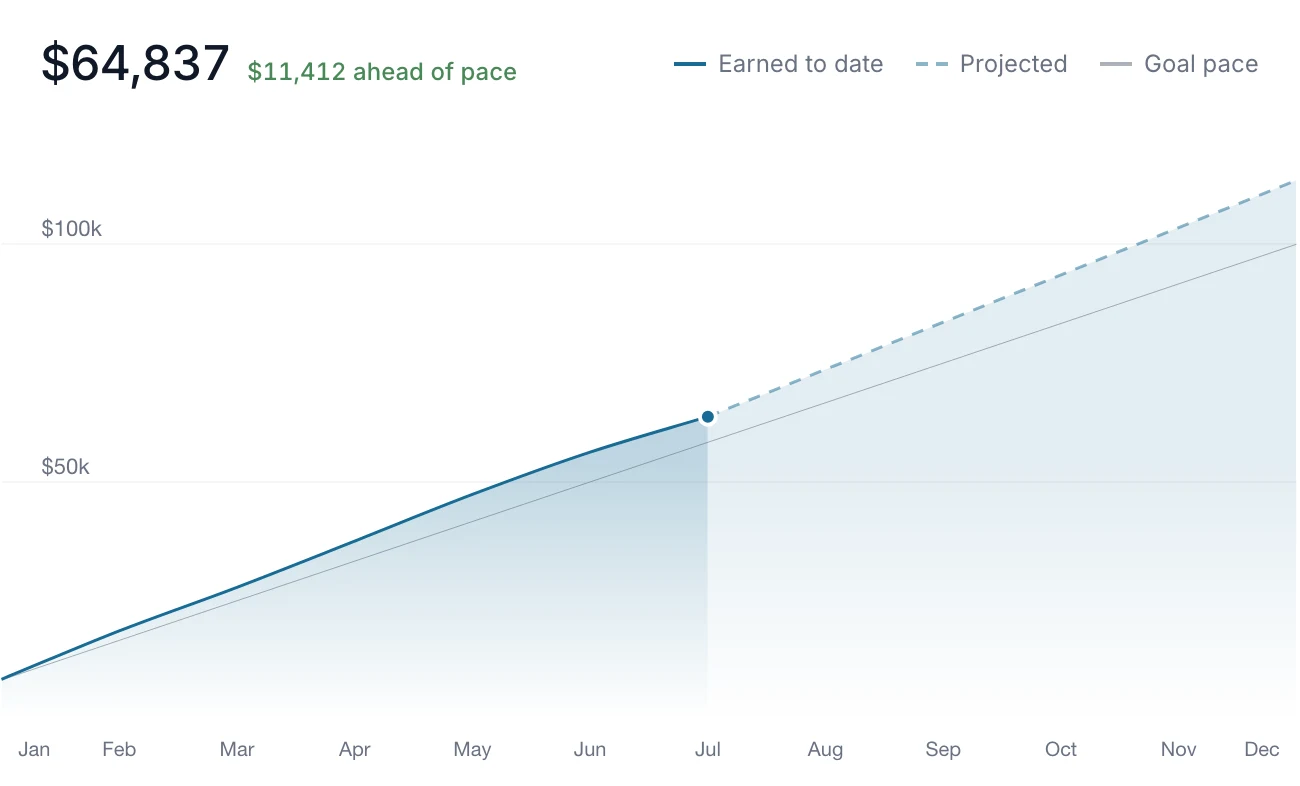
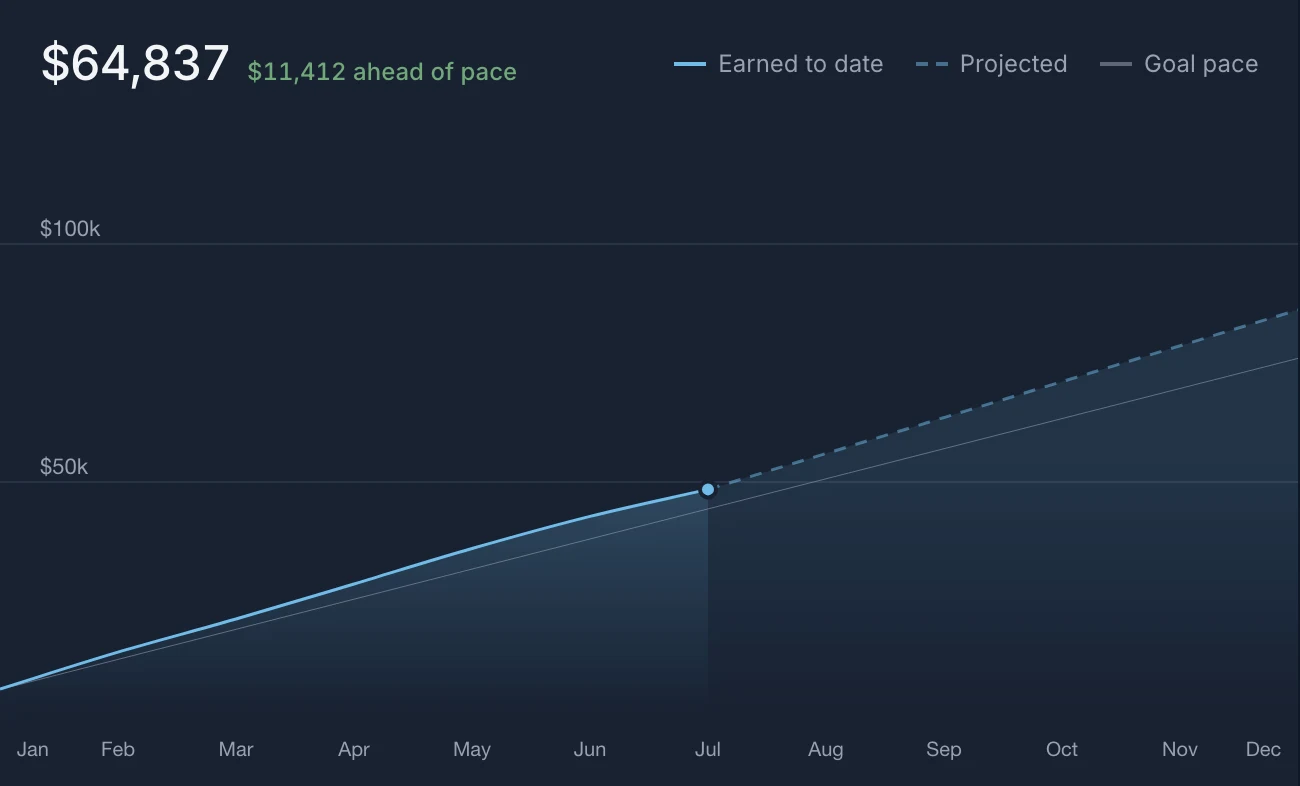
One last thing worth ten minutes of your time: decide now what happens to the deposit if the client cancels, and write it down. Typing "non-refundable" next to a number does less work than everyone hopes, and swapping the word deposit for the word retainer does even less, because a sum meant to compensate you for a cancellation has to be a reasonable estimate of the loss rather than a punishment before anyone will enforce it.
What actually helps is saying in the agreement what the money is for: holding dates you'll otherwise turn down, prep work, the first stage of the project. Then the number has something real behind it, and one hopeful adjective isn't carrying the whole clause.
So: bring the number up while you're still talking about money, say it without a question mark, offer a smaller version when someone pushes back, and take the balance as seriously as you took the deposit. That's all of it, honestly. It costs you a contract template and about thirty seconds of nerve.
The one thing upfront payment can't do is keep an eye on itself. Somebody still has to notice that Monday's deposit invoice never cleared, and that the balance you sent three weeks ago went past due while you were heads-down on the next job. That noticing is worth handing to something that never gets busy.